What is an olive oil stand?
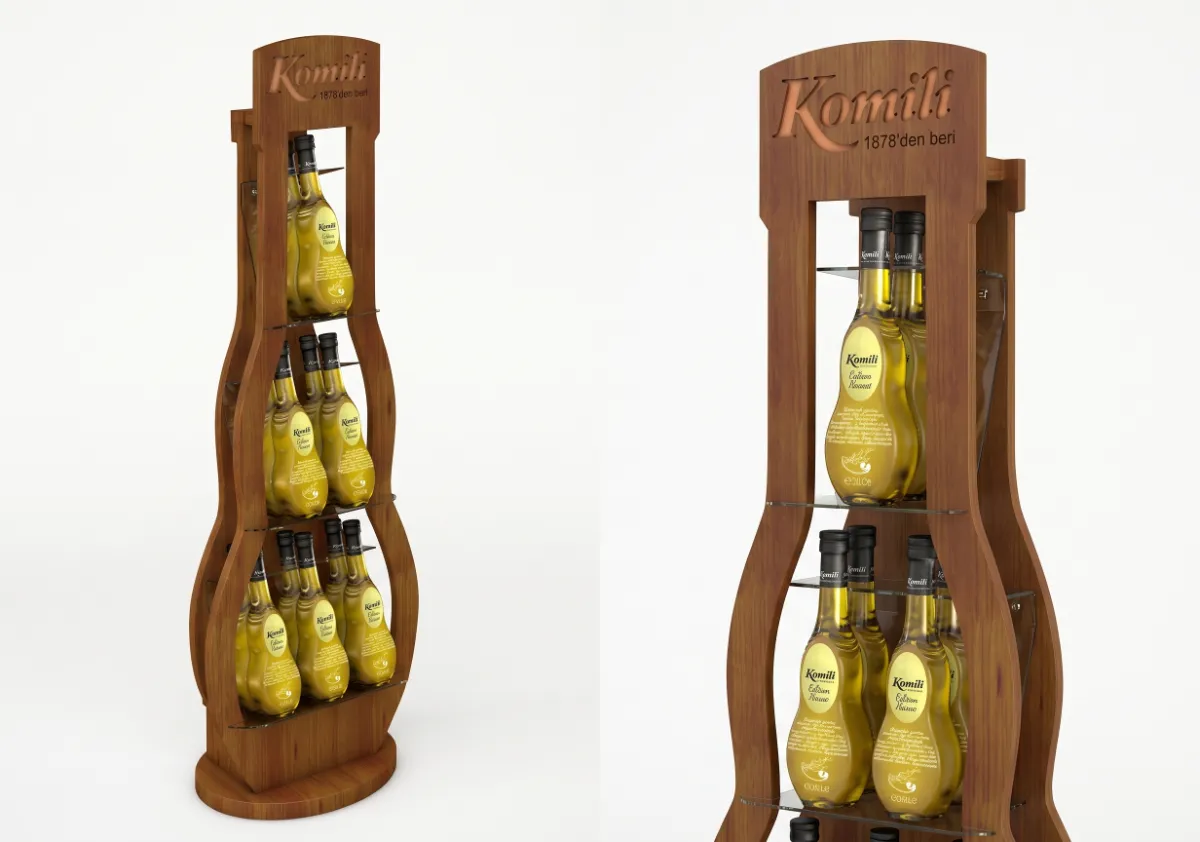
Olive oil display stands are display units designed for the organized, secure, and eye-catching display of bottles and cans of olive oil in various sizes at points of sale. They can be used in diverse sales environments, from supermarkets and gourmet shops to delicatessens and tasting events. They create a brand-specific promotional area while separating products from standard shelf arrangements.
Olive oil packaging varies in weight, size, and material. If glass bottles, PET containers, and metal cans are to be displayed on the same stand, the shelf dimensions and support system must be calculated according to these products. Therefore, an effective olive oil display stand should be developed not only based on visual expectations but also considering the product load, usage method, and store conditions.
Why are Olive Oil Stands Important?
In the olive oil category, consumers consider various factors besides price, including production region, olive variety, harvesting method, taste profile, packaging, and brand reliability. A stand specifically designed for a brand helps present this information in a more understandable way, setting products apart from the intense competition on the shelf.
Separates products from standard shelf arrangement.
Many olive oil brands are displayed side-by-side on supermarket shelves. Presenting the product in its own display unit makes the packaging and brand identity more easily noticeable. Especially during new product launches, seasonal campaigns, and for premium product groups, the use of dedicated stands strengthens the brand's visibility at the point of sale.
It tells the brand's story.
The origin and production history of an olive oil product play a significant role in the purchasing decision. The production region, olive variety, harvest season, or key features of the product can be explained in graphic areas of the stand such as the header, side panels, and shelf fronts. In this way, the stand transforms from a mere product display unit into a three-dimensional communication space that conveys the brand's story to the consumer.
Presents Product Groups in an Organized Way
Different volumes, packaging, and product lines from the same brand can be neatly grouped on a single display stand. Creating separate sections for everyday use products, premium series, flavored oils, and specialty packaging helps consumers compare options more easily.
It supports tasting and promotional activities.
In projects that include product display along with tastings or information sessions, the stand can be enhanced with a work surface for the brand representative. Sections allocated for sample products, service equipment, brochures, and stock items ensure that the promotional activity is conducted in a more organized and professional manner.
What are the different types of olive oil stands?
The type of stand to be used is determined by the number of products to be displayed, the weight of the packaging, the available space at the point of sale, and the duration of the project. Different structural solutions should be developed for permanent store applications and for short-term campaigns and tasting events.
Freestanding Olive Oil Stands
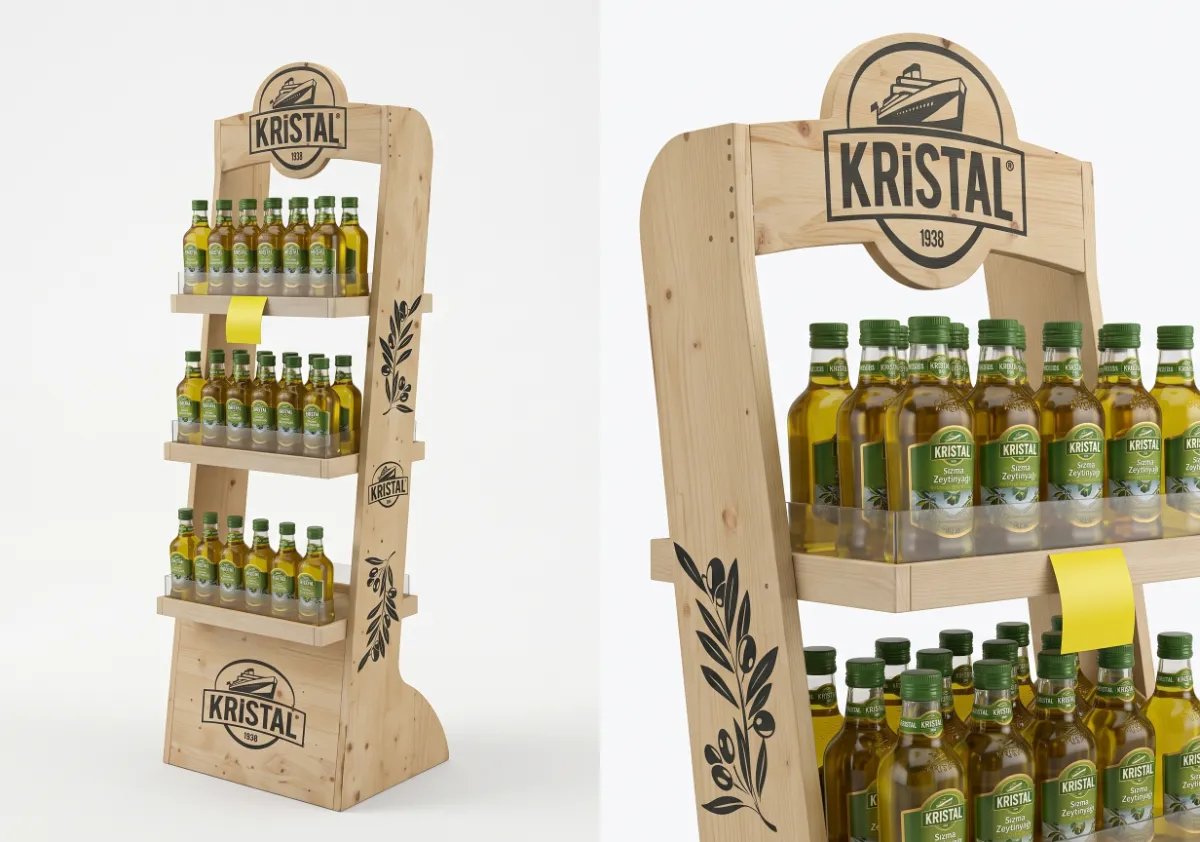
Freestanding displays can be placed at different points within the store, independently of existing shelving. Because they can support multiple shelves, they allow for the simultaneous display of different product types and packaging sizes. They offer suitable solutions for main aisles, category entrances, promotional areas, and gondola ends.
Countertop Olive Oil Stands
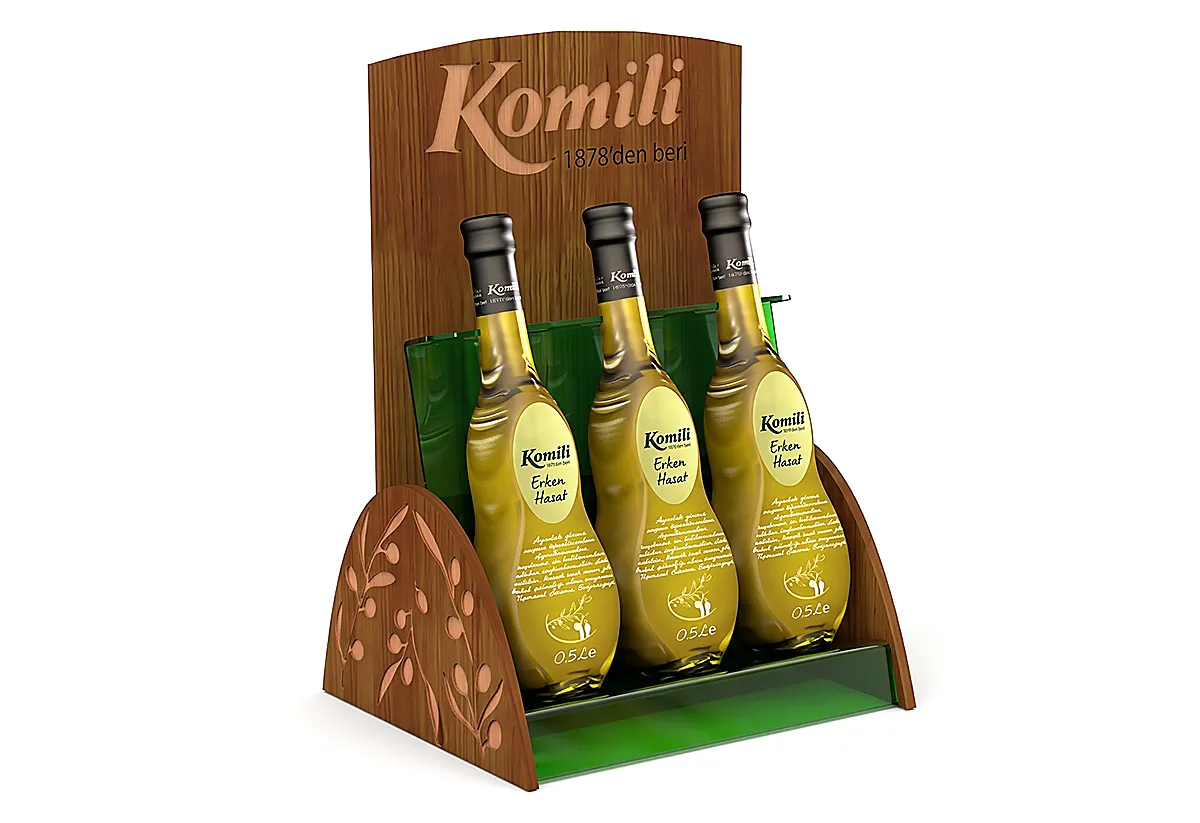

Countertop displays can be used to showcase small-volume bottles, premium products, sample sizes, or special editions. They offer a compact display solution for gourmet shops, delicatessens, tasting areas, and limited space around the checkout counter.
Gondola and Shelf Branding Applications
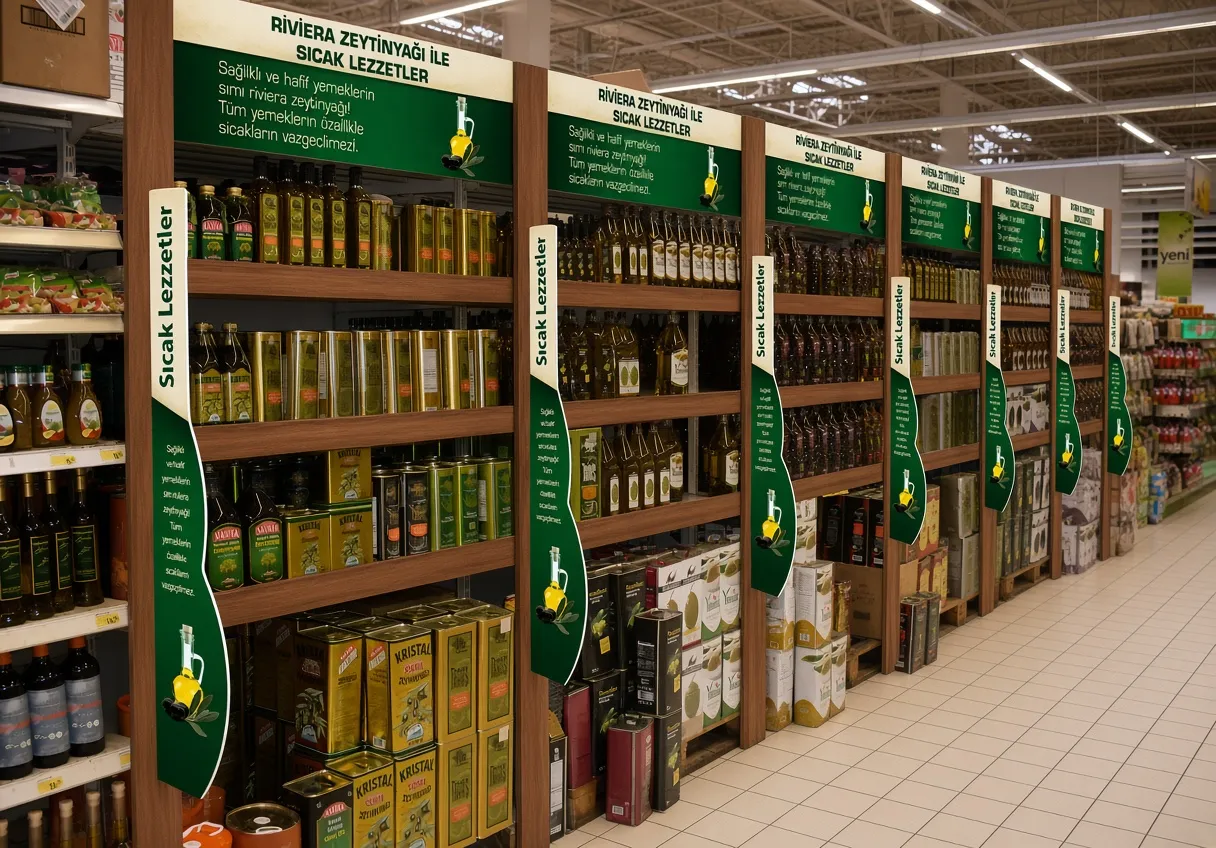
Gondola displays or olive oil sections can be transformed into a holistic display area with brand-specific headers, side panels, shelf fronts, product dividers, and information areas. These applications help brands with a wide product range to present different product groups under the same visual identity.

Tasting and Promotion Stands
Tasting stands combine product presentation and consumer communication in one place. The counter surface, product display shelves, covered storage area, and graphic panels can be integrated into a single structure according to needs. They can be used for in-store tasting sessions as well as at trade shows, festivals, and product launches.
Gift Sets and Premium Product Displays

For specially packaged bottles, limited production series, and gift boxes, stands with lower product capacity but high visual value can be designed. Prioritizing the display of products without obscuring each other, keeping packaging details visible, and ensuring the stand supports a premium brand image are key in these applications.
What should be considered when designing an olive oil display stand?
Bottle and Can Dimensions
Before the design phase, the width, height, depth, and weight of all products to be displayed must be determined. If bottles and cans of different volumes are to be used on the same stand, the shelf spacing should be arranged accordingly to prevent products from obscuring each other.
Load Capacity and Balance
Olive oil packaging, especially glass bottles and large-volume tins, can have a high total weight. The shelves, connection points, support body, and base must safely bear the expected product load. Since the weight distribution will change as the consumer picks up the product, the stability of the stand in a partially empty state should also be considered during the design process.
Product Safety
Shelf edges, product dividers, and appropriate shelf depths should be used to prevent glass packaging from sliding or falling. A safe display arrangement should be established without hindering product access; the corners of the stand and all surfaces that the consumer may come into contact with should be detailed in a way that is suitable for store use.
Brand Identity and Graphic Design Areas
The stand's colors, material characteristics, typography, and graphic language should be consistent with the brand's positioning. The header board ensures visibility from a distance, while shelf fronts and side panels can be used to explain product features. The density of graphics should be balanced so as not to overshadow the product packaging.
Product Access and Shelf Restocking
Consumers should be able to easily see the product and safely retrieve it from the shelf. Store staff should also be able to quickly restock empty shelves. Shelf depth, product arrangement, and stock areas should be planned with both consumer experience and store operations in mind.
Store Conditions and Cleanliness
The display stand must not obstruct in-store circulation, hinder cleaning, or impede the space it occupies. Surfaces should be made of materials that are easy to clean during daily use and maintain their visual quality.
What materials are used in olive oil stands?

In olive oil display stands, MDF and other wood derivatives, metal, wire, aluminum, plexiglass, PVC, and various surface coating materials can be used. Material selection should be based on the weight of the product the stand will support, its lifespan, the production quantity, store conditions, and the visual impact the brand aims to achieve.
Wooden surfaces offer a natural and warm look, while metal support systems create a durable structure for high product loads. Plexiglass elements can be used as product dividers, information areas, or decorative details. Mixed-material solutions allow for the combination of durability and a visual character consistent with the brand identity within the same structure.
What should the visual design of olive oil stands be like?
Olive oil stands often utilize natural wood textures, shades of green, warm neutral colors, and graphic elements that evoke the product. However, relying solely on general visual codes specific to the category can lead to brands looking similar. Therefore, color and material choices should reflect the brand's own identity, target audience, and product positioning.
While traditional product lines may utilize an approach that emphasizes the region of origin and craftsmanship, premium series could opt for a simpler, more controlled, and sophisticated design. For everyday products, easily understandable pricing and promotional areas could be highlighted.
Olive Oil Stand Production Process
The production process begins with a brief that includes the brand's goals, products to be displayed, number of projects, lifespan, and point-of-sale conditions. After examining the dimensions and weight of the product packaging, the overall form of the stand, shelf capacity, material structure, and graphic areas are determined.
Following design approval, prototypes are prepared for the necessary projects, and placement and load checks are performed with real products. Shelf spacing, product access, stand balance, graphic applications, and assembly details are evaluated based on the sample. After the necessary adjustments are completed, mass production begins.
Cutting, metal processing, surface treatments, digital printing, lamination, and assembly processes are planned according to the stand's material structure. Once production is complete, the units undergo a quality control process and are packaged appropriately for shipment. Depending on the project scope, distribution to stores or on-site installation may also be planned.
Where are olive oil stands used?
Olive oil display stands can be used in supermarkets, hypermarkets, gourmet shops, delicatessens, producer outlets, cooperative stores, hotels, fairs, festivals, and tasting events. The size, product capacity, and material structure of the stand should be adapted to the sales channel in which it will be used.
While standardized and easy-to-install solutions that can adapt to different store types are becoming increasingly important in chain supermarkets, gourmet retail outlets may prefer stands with lower product capacity but that stand out with their material and surface quality.
Doa Sense Olive Oil Stand Design and Production Solutions
At Doa Sense, we develop olive oil stand projects by considering product, brand, and point-of-sale conditions together. From floor-standing stands to countertop units, From gondola applications to tasting stands, we design and manufacture display solutions to suit different needs.
In projects using wood, metal, plexiglass, and mixed materials, we plan the design, prototyping, mass production, packaging, distribution, and store setup processes according to your needs. Our goal is to produce stands that ensure the safe display of products, are compatible with store operations, and enhance the brand's visibility at the point of sale.
Frequently Asked Questions About Olive Oil Stands
Can an olive oil display stand be custom-made for a specific brand?
Yes. The stand's dimensions, shelf capacity, materials, colors, graphic applications, and structural features can be custom-designed to match the brand's product range and point-of-sale needs.
What kind of display stand should be designed for glass bottles?
Considering the dimensions of the glass bottles and the total weight of the products, durable shelves, secure shelf edges, and a stable support structure must be created. Details should be used to ensure easy access to products while minimizing the risk of slipping and falling.
Which material is most suitable for an olive oil display stand?
The choice of material depends on the product weight, lifespan, production quantity, project budget, and desired visual character. Wood, metal, plexiglass, or hybrid structures using a combination of these materials can be preferred.
Can a prototype be prepared before mass production?
Depending on the project's structure, a prototype or sample can be prepared before mass production. This allows product placement, shelf capacity, load-bearing capacity, stand stability, and graphic applications to be checked against real products.
Is it possible to set up a tasting area on the stand?
Yes. Depending on the project's intended use, a tasting surface, sample area, brochure holder, and covered storage compartment can be designed along with product display shelves. The dimensions of the unit should be planned according to the event space and the usage of the staff.
Let us develop a customized olive oil display stand for your brand.
For a brand-specific stand project that will display your olive oil products in a more visible, organized, and secure manner at the point of sale. You can contact us. Share the product dimensions, project quantity, and information regarding the sales points where the application will be implemented; let's plan the process together, from design to prototyping, mass production to installation, to suit your needs.